
The house has been insured for years — or so everyone at home assumes, because the bank sorted something out when the loan was approved. Nobody has read the policy. Then the drain behind the terrace overflows in the monsoon and the family group chat asks the only question that matters: covered or not? Alamak.
Home insurance in Malaysia is three products sold under one everyday name, and two rules that decide most outcomes are not in the policy at all: a Bank Negara Malaysia policy document on what a bank may require with a housing loan, and the Strata Management Act 2013 on what your building’s management must buy.
Quick Answer: a basic fire policy insures the building only, against fire, lightning or explosion. A houseowner policy insures the building against a wider list — PIAM’s September 2026 consumer guide puts burst pipes, windstorm, earthquake and flood in the standard table, with an excess on the last three. A householder policy insures what is inside. The sum insured should be what it costs to rebuild, not what the property would sell for; if it is too low, a claim may be reduced proportionately. A bank may require fire insurance as a condition of a home loan but must let you buy it from an insurer outside its panel, and the management body of a strata building must insure the building for at least its restoration value, re-valued at least once every 5 years.
- Start here: find your policy schedule. It is the page that says which of the three products you hold, what the sum insured is, and which perils carry an excess.
- Three clocks: 30 days from the incident to submit a claim with its documents, in PIAM’s guide; at least 30 calendar days of notice before your policy expires; 6 months from the insurer’s final decision to reach the ombudsman.
- Catch: in a condo, the management’s policy is for the building. The Act’s own list of perils for that policy names fire, lightning, explosion, burst or overflowing tanks and pipes, and windstorm — flood is not on the list, so whether the building is covered for it depends on what the policy itself specifies.
Table of Contents
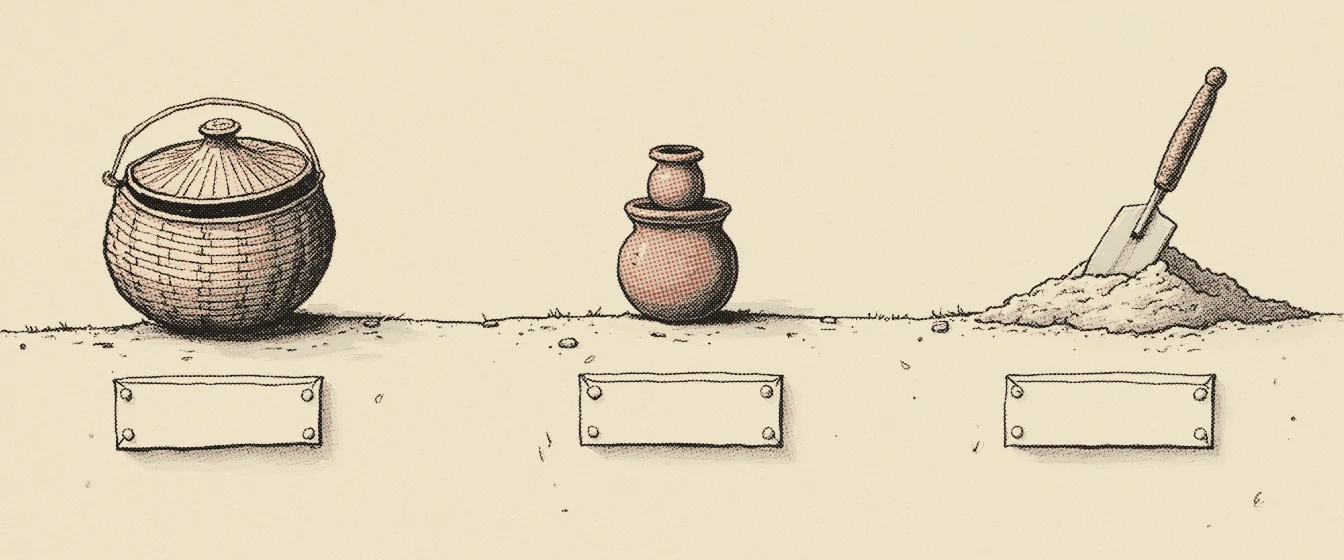 Which policyThe buildingRebuild cost
Three Products Under One Name
Bank Negara Malaysia’s Policy Document on Product Transparency and Disclosure, BNM/RH/PD 028-136, issued and in effect on 2 December 2024, sets out what an insurer or takaful operator must explain before you buy. It lists three covers — basic fire, houseowner and householder, each as a policy or takaful certificate — and defines the first: the basic fire cover is for the building only, against loss or damage by fire, lightning or explosion.
PIAM, the statutory trade association of general insurers, fills in the other two in its consumer guide dated September 2026. A standard houseowner policy covers the residential building — a house, flat or apartment — including fixtures, fittings, garages, walls, gates and fences. A standard householder policy covers household contents and personal belongings belonging to you, your family or tenants occupying your rented property. The guide describes home insurance as covering a building or contents used solely for residential purposes.
PIAM’s own website adds a fourth label, All Risks, described as the broadest coverage with only specific named exclusions, and calls householder cover ideal for renters or tenants who do not own the property. For owners who let out a unit, PIAM notes that landlord and other specialised covers may be available for rental properties. If you rent, the other half of the picture is the tenancy agreement itself.
One structural point explains why two policies with the same name can differ. BNM’s 2016 policy document on the phased liberalisation of motor and fire tariffs kept fire products defined under the Fire Tariff — its own examples are ‘House owner’ and ‘Householder’ — priced according to that tariff, while new products introduced from 1 July 2016 are priced by each insurer’s own model. PIAM’s March 2023 flood statement still refers to “tariff houseowner and householder policies”. A product sold under the everyday name can be either kind, which is why every section below ends at the same document: your schedule.
What a Standard Policy Lists
PIAM’s guide sets out standard cover in one table, a column for the building (houseowner) and one for contents (householder), reproduced below. An excess applies to the perils marked with two asterisks in the guide — windstorm, earthquake or volcanic eruption, and flood — and the amount is whatever your policy schedule states.
| What happens | Houseowner (building) | Householder (contents) |
|---|---|---|
| Fire, lightning, thunderbolt, subterranean fire | Covered | Covered |
| Domestic explosion | Covered | Covered |
| Aircraft damage; impact by road vehicles or animals | Covered | Covered |
| Bursting or overflowing of domestic water tanks, apparatus or pipes | Covered | Covered |
| Theft, but only with actual forcible and violent breaking into or out of the building; robbery and hold up in the premises | Covered | Covered |
| Hurricane, cyclone, typhoon or windstorm — excess applies | Covered | Covered |
| Earthquake or volcanic eruption — excess applies | Covered | Covered |
| Flood, excluding loss or damage caused by subsidence or landslip — excess applies | Covered | Covered |
| Loss of rent | Limit 10% of total sum insured | Limit 10% of total sum insured |
| Liability to the public | Limit RM50,000 | Limit RM50,000 |
| Damage to mirrors | Not covered | RM500 per piece, any one incident |
| Compensation for death of the insured | Not covered | RM10,000 or half the total sum insured on contents, whichever is lower |
Two contents rules decide more claims than the peril list does. Any single item worth more than 5% of the total sum insured on household contents must be declared separately — furniture, pianos, organs, household appliances, radios, television sets, video recorders and hi-fi equipment are the exceptions. And platinum, gold and silver articles, jewellery and furs must not exceed one third of the total sum insured on contents in total value. Contents temporarily removed from the home are covered up to 15% of the total sum insured on contents, but not if they were removed for sale, exhibition or to a furniture depository.
Theft means a break-in. BNM’s disclosure rules make the insurer tell you that a householder policy does not cover a theft claim without evidence of forced and violent entry or exit.
What a standard policy leaves out, in PIAM’s list: damage during war or military conflict; radioactive and nuclear risks; terrorism-related losses; loss or damage by burst pipes while the home is untenanted; subsidence, landslip, riot, strike and malicious damage, which are available as add-ons; and consequential or financial loss, other than rent insurance. The add-ons PIAM names include plate glass, windstorm damage to outdoor fixtures such as gates and fences, cover for a home left unoccupied for more than 90 days, full theft cover including theft by domestic staff, and a higher public liability limit.
Public liability is where the official documents do not line up. PIAM’s table includes it, at RM50,000, and PIAM’s statement of 19 August 2026 says standard houseowner policies generally provide a limit of RM50,000, with extensions available to raise it. BNM’s template Product Disclosure Sheet for houseowner and householder cover — expressly an illustration — lists “liability to third parties for accidents in your house” among the covers you add by paying more. The disclosure sheet for your own product settles which applies to you.
The same August 2026 statement covers home EV charging: standard houseowner and fire policies cover fire regardless of the ignition source, subject to the policy terms and provided there is no fraud, deliberate act or other breach. A hard-wired charger may be treated as a fixture under the buildings section, and PIAM advises telling your insurer when one is installed.
Flood and Landslip: Read the Word Standard Carefully
On one point PIAM is consistent. Its statement of 4 September 2025 says a basic fire policy often excludes earthquakes, floods, windstorms and other climate-related risks, most of which can be added for an additional premium, and that houseowner and householder cover includes earthquake as part of its standard cover. Its November 2025 article says houseowner and householder insurance offers flood, storm and earthquake protection as part of standard coverage, while a basic fire policy covers only fire, lightning or domestic gas explosions and needs an extension for floods or storms.
Landslip is the gap. The same article states that standard houseowner and householder policies exclude landslide and landslip, and suggests an extension for homes in hilly or high-risk areas. BNM’s disclosure rules name the same extension: a houseowner or householder policy can be extended to cover subsidence, landslip, riot, strike and malicious damage. The flood line in PIAM’s table carries the same qualification — flood, excluding loss or damage caused by subsidence or landslip.
Here the documents part ways again. PIAM’s own web page lists “flood coverage” among optional add-ons, and BNM’s 2016 tariff document gives ‘Flood’ as an example of an add-on for fire products, while BNM’s template disclosure sheet puts flood inside the illustrative houseowner cover. The line on your schedule is the answer; nothing else is.
After a large flood, one timeline also stretches. BNM’s claims rules give an adjuster 14 working days to finish a non-motor assessment, except in exceptional circumstances — and natural catastrophe losses such as major floods are named as one.
With a Housing Loan: What the Bank May Require
Borrowers often hear that a bank cannot force insurance on them. That is half right. BNM’s Policy Document on Prohibited Business Conduct, BNM/RH/PD 028-21, in effect since 15 July 2016, says a provider is not engaging in prohibited conduct when it requires consumers to purchase fire insurance or takaful, or mortgage reducing term assurance or takaful, in the case of home financing. The protection is in its footnote: while the provider may give quotations from its own panel, you must be allowed to use an insurer or takaful operator outside that panel.
So the bank may require the cover, and you choose who provides it. The disclosure rules say the same from the other side. Standard 1.1.7 requires the bank to indicate any insurance or takaful requirement, and the coverage required, as a condition of the loan. Standard 1.1.8 requires it to tell you that you are not obliged to buy from its panel, and forbids it from buying a policy on your behalf from that panel without your expressed written consent. The standard obliges the bank to state the coverage it needs; it does not set the amount. Ask for that requirement in writing before you buy elsewhere, so the policy you bring matches it.
PIAM’s website puts it plainly: most mortgage lenders require home insurance. The rebuilding-cost rule below applies whoever arranges the policy.
Mortgage assurance is a different product with a different job. BNM describes MRTA or MRTT required with home financing as a safety net for the borrower’s family against losing the home if the borrower dies, and notes that borrowers may obtain financing from other banks that do not require it to be bundled. It does not insure the building. For what happens to MRTA and MRTT when the loan changes, see the refinance guide.
Strata Homes: What the Building Must Carry
For flats, apartments, condominiums and other strata developments in Peninsular Malaysia and the Federal Territory of Labuan — the only places the Strata Management Act 2013 applies — building insurance is a duty the Act places on whoever manages the building. Section 93(1) requires any person or body with a duty under the Act to maintain and manage a building to insure it under a damage policy with a licensed insurer. The duty passes from the developer to the joint management body and then the management corporation, and the first general meeting confirms the takeover of the developer’s insurance.
Section 93(2) defines the policy. It must pay, where the building is destroyed or damaged by fire, lightning, explosion, bursting or overflowing of water tanks or pipes, windstorm, and any other event specified in the policy, for rebuilding or replacement in a condition no worse than new, for repair or restoration of damaged parts to the same standard, for debris removal, and for the fees of architects and others whose services are needed. The Act’s own list does not name flood. Whether your building’s policy covers flood depends on what that policy specifies.
Section 94 sets the floor on the amount: at least the restoration value shown by the latest valuation, with a restoration valuation obtained from a registered valuer at least once every five years, paid for from the maintenance account. Section 93(3) allows a policy to cap the insurer’s liability at a stated sum, but not below that valuation. Beyond the damage policy, section 98 lets the management insure other risks when owners direct it by special resolution, and the housing ministry’s strata handbook lists taking insurance other than a damage policy among the uses of a special resolution, which needs 21 days’ notice and a three-quarters majority.
The premium is not a separate bill. KPKT’s handbook states that the insurance charge cannot be collected separately from the monthly maintenance charge, because insuring the building and common property is the management body’s responsibility, paid from the maintenance account. For how the maintenance charge and the Tribunal work, see the strata guide.
Two by-laws in the 2015 Regulations bring the building policy down to your own unit. By-law 3(6) requires the management to give an owner, on written request and for a fee not exceeding RM50, copies of all insurance policies taken under the Act or by special resolution, with receipts for the last premiums paid. By-law 8(7) requires an owner to repair, at his own cost and within any time the management sets, any damage to his parcel that is excluded under a policy the management took out — failing which the management may do the repair and charge the owner. The by-laws bind every stage of management, from developer to management corporation.
Section 97 is the exception landed strata owners need. The insurance required by this Part does not apply to land parcels; every parcel owner or proprietor is responsible for insuring his building on a land parcel. Whether your title is a land parcel is a question for the title itself. Section 100 then directs where money from a building claim goes: forthwith into rebuilding, replacement, repair or restoration, subject to orders or resolutions under the Strata Titles Act 1985.
| The rule | Where it sits | What it says |
|---|---|---|
| Duty to insure the building | Act 757, section 93(1) | Under a damage policy with a licensed insurer |
| Perils the Act names | Section 93(2) | Fire, lightning, explosion, bursting or overflowing of water tanks or pipes, windstorm, plus any event the policy specifies |
| How much | Section 94(1) and (2) | At least the restoration value in the latest valuation; a registered valuer at least once every five years |
| Who pays for the valuation | Section 94(3) | The maintenance account |
| Land parcels | Section 97 | Not covered by this duty; each parcel owner insures the building |
| Other risks | Section 98 | As directed by owners by special resolution |
| A copy of the policy | By-law 3(6) | On written request, for a fee not exceeding RM50 |
| Damage the policy excludes | By-law 8(7) | The owner repairs his parcel at his own cost |
| The payout | Section 100 | Applied forthwith to rebuilding, replacement, repair or restoration |
| A dispute about the insurance | Fourth Schedule, items 10 and 11 | Tribunal claims to vary the amount of insurance, or to pursue an insurance claim |
The Sum Insured: What It Costs to Rebuild
Two BNM standards carry the most important sentence in home insurance. At purchase, standard 4.2.1(d)(ii) requires the insurer to advise you to insure the property adequately, taking renovations into account: the sum insured should cover the cost of rebuilding the property in the event of loss or damage. When the policy is due for renewal, standard 4.3.2 requires the expiry notice to remind you of the same thing and to highlight that the sum insured should cover the cost of rebuilding.
PIAM’s guide puts it in plain terms: the sum insured is the maximum your insurer will pay on a total loss, so it should reflect the full cost of rebuilding your home and replacing its contents, including any renovations, extensions or improvements, and any revision is subject to the insurer’s approval. Its September 2025 statement adds that insuring on market value instead of rebuilding cost may result in inadequate compensation, and asks owners to reassess each year, especially after renovations, since the policy is renewed yearly.
For an estimate, PIAM runs a free Building Cost Calculator, which its guide calls an indicative calculation of your home’s current rebuilding cost, to be checked before every renewal — and which does not determine your final quotation, premium or sum insured. The calculator’s estimate includes demolition and removal cost, professional consultancy cost and built-in furniture; its rate table carries the date 06/07/2026, and it tells owners of properties with unusual design features to go to a professional valuer instead. Those items mirror what Act 757 requires a building’s damage policy to pay for: debris removal and the fees of architects and others.
Contents follow a second rule. BNM requires the insurer to explain whether householder compensation is on a reinstatement or a replacement basis, and to advise you to declare each item specifically and keep purchase receipts to support a claim.
Under-Insurance: How a Claim Gets Cut
PIAM’s guide is direct: if your home is underinsured, claim payments may be reduced proportionately. PIAM once published a worked example of the principle of average, in 2014. The sum insured was RM300,000, the rebuilding cost RM500,000, and the loss RM200,000 — so, being underinsured, the insurer paid RM120,000 instead of RM200,000. The same interview put the logic in one line: the payable amount is reduced proportionately because part of the claim is treated as self-insured.
Note that the loss in that example was well under the sum insured, and the owner still carried a share of it.
Over-insurance does not help either. BNM requires insurers to explain the effect of both over-insurance and under-insurance when a claim is made, and two principles behind it: the contract of indemnity, which aims to restore you, as far as possible, to the position you were in immediately before the loss; and contribution, under which an insurer is liable only for its rateable proportion where more than one policy covers the same property. That principle is worth knowing in a strata building, where the management’s policy already covers the structure.
Buying and Renewing: The Paperwork You Are Owed
Before you buy, standard 4.1.1 requires the insurer to tell you that it is licensed under the Financial Services Act or the Islamic Financial Services Act and regulated by BNM, and to name any intermediary and the insurer underwriting the cover. PIAM runs a public check by NRIC number or PIAM registration number to confirm that the person you are dealing with is a registered agent.
The Product Disclosure Sheet is the short document to read first. BNM’s template for houseowner and householder cover shows a one-year cover renewed annually and lists the charges on top of the premium: stamp duty, a commission or wakalah fee, and other applicable charges. The stamp duty is fixed by law — item 58(2) of the First Schedule to the Stamp Act 1949 charges RM10.00 on every fire policy and renewal, irrespective of the sum insured or the term, in LHDN’s reprint as at 1 July 2014.
Disclosure runs both ways. PIAM’s guide says that when you apply for, renew or change a home policy you have a duty to take reasonable care not to make a misrepresentation — answer the insurer’s questions accurately and tell it about changes to the property or your circumstances. Renovations belong on that list, and so does a newly installed hard-wired EV charger.
The insurer must send a notice of expiry at least 30 calendar days before the expiry date. You may cancel at any time by written notice, and for houseowner and householder cover the refund is on short period rates. If the insurer cancels, PIAM’s guide says you receive a pro-rata refund for the unused period, provided you have not made a claim and subject to the policy terms.
Making a Claim: Steps, Documents and Deadlines
PIAM’s guide sets out five steps: notify your insurer immediately, giving the nature and extent of the loss or damage; if the house has had a break-in, lodge a police report immediately; photograph the damage or the point of entry; submit your claim and all supporting documents to your insurer within 30 days of the incident; and cooperate with the loss adjuster your insurer appoints. Its September 2025 statement adds that the police report should be lodged as soon as possible, ideally within 24 hours, unless waived in exceptional cases, and that most insurers have a claim reporting timeline of their own — so your policy’s notification clause is the one that binds you.
The documents PIAM lists are a completed claim form; a written statement describing the items lost or damaged; an estimate of repairs for the damaged building; purchase invoices, receipts or valuation reports for stolen or damaged items; photographs of the damage or the premises where no adjuster is appointed; the final repair or replacement bills; and anything else the insurer or adjuster requires. The 2025 statement adds a Fire and Rescue Department report where applicable, proof of ownership, and an inventory of damaged contents with values, models and serial numbers.
Two warnings sit in PIAM’s own material. Before any repair — including emergency work — get written approval from your insurer, as unauthorised work may not be covered. And if someone makes a liability claim against you, do not agree to a settlement on your insurer’s behalf; contact the insurer first.
Once the claim is in, the insurer runs on BNM’s clock. The Policy Document on Claims Settlement Practices, BNM/RH/PD 029-69, binds general insurers, takaful operators and registered adjusters, for motor and non-motor claims alike. The non-motor deadlines:
| What the insurer must do | Non-motor time limit | Paragraph |
|---|---|---|
| Register the claim and start processing | 7 working days from the claim notification | 10.2 |
| Acknowledge the claim in writing | 7 working days from the claim notification | 10.3 |
| Remind you about missing documents | 7 working days from its own request | 10.9 |
| Assign an adjuster or in-house assessor | 5 working days from complete information and documents | 10.11 |
| Finish the adjusting or assessment | 14 working days from complete documents, except exceptional circumstances such as major floods | 10.13 and 10.14 |
| Update you while an investigation continues | 21 working days from the first notification, then at regular intervals | 10.20 |
| Send the approval, offer or rejection letter | 7 working days from the final adjuster report or assessment | 10.22 |
| Pay the claim | 14 working days from your acceptance of the offer and all relevant documents | 10.29 |
A refusal has to be in writing and give its reasons. The insurer may not repudiate on a technical breach of a warranty or condition that is not material or relevant to the circumstances of the loss, unless it is clearly prejudicial to the insurer or the claim is beyond the time bar under the relevant laws. And the amount of a claim may not be reduced in exchange for paying it early.
The excess comes off first. PIAM’s example: a burst pipe costing RM2,000 to repair, an excess of RM50, and the insurer paying RM1,950, subject to the policy terms.
When the Answer Is No: Three Doors
BNM’s complaint process has three steps. Lodge the complaint with your insurer’s Complaints Unit — BNM notes that the Claims Unit is not the Complaints Unit, and it will not accept complaints that have not been through the Complaints Unit first. Obtain a response and final decision. If there is no response after 14 days, refer the case to BNMLINK. BNMLINK answers on 1-300-88-5465, or +603-2174-1717 from overseas, 9:00 a.m. to 5:00 p.m. on weekdays. It does not take cases on an insurer’s commercial decisions, cases already with the ombudsman, a court or a tribunal, time-barred cases, or requests to interpret policy wording; it does not give legal opinions.
The Financial Markets Ombudsman Service is the free dispute route, set up by BNM and the Securities Commission on 1 January 2025 by consolidating the Ombudsman for Financial Services with the securities industry’s dispute centre. Its FAQ lists insurance and takaful claims on life, medical, motor, general non-motor, travel and third-party property damage, with direct financial losses up to RM250,000; its Our Scope page lists the same categories without naming general non-motor, so confirm with FMOS if your insurer tells you a home claim is outside it. Its Rules set the monetary limit at RM250,000 per dispute. Claims above that go to FMOS only if both sides agree in writing, and commercial decisions such as pricing, fees and underwriting stay outside.
The time limits: within 6 months of receiving the insurer’s final decision, or where the insurer fails to respond within 60 days of your first complaint. The final decision must be in writing and state that FMOS is available. The letter may still name the old body: BNM’s claims rules prescribe a statement telling you to refer your dispute to the Ombudsman for Financial Services within 6 months, and that body is now part of FMOS. A registered case goes to mediation, then a written recommendation, then, if either side refers it within 30 days, an Ombudsman decision; if you accept it, it binds both sides and the insurer complies within 14 days, and if you reject it there is no appeal — court or arbitration remain. FMOS answers on +603 2272 2811, at No. 4 Jalan Sultan Sulaiman, 50000 Kuala Lumpur.
For a strata building, the third door is the Strata Management Tribunal. The Fourth Schedule to Act 757 lists two insurance claims it can hear: a claim for an order to vary the amount of insurance provided, and a claim for an order to pursue an insurance claim. PIAM, for general questions about home insurance, is on 03-2274 7399 or [email protected].
Walaoeh Verdict
Find the schedule before the storm, not after. It tells you which of the three products you hold, the sum insured, which perils carry an excess, and whether flood and landslip are in. Compare the sum insured with rebuilding cost — PIAM’s calculator is free — not with market value, and declare any single item worth more than 5% of your contents cover (subject to the furniture-and-appliances exceptions noted above).
Then read the rules that sit outside the policy. With a housing loan, the bank may require fire insurance but must let you buy it from an insurer outside its panel. In a strata building, the management must insure the structure for at least its restoration value and give you a copy of the policy for no more than RM50 — ask for it, and look at what it excludes, because under by-law 8(7) damage the policy excludes is yours to repair. On a land parcel, section 97 hands the building back to you. When something happens: report, photograph, get written approval before repairs, and submit within 30 days. After that the insurer’s clocks run, and a refusal goes to the Complaints Unit, then BNMLINK or FMOS within 6 months.
Frequently Asked Questions (FAQ)
Is fire insurance compulsory for a house in Malaysia?
Two official rules require cover in specific situations. For a home loan, BNM’s Prohibited Business Conduct policy document allows a bank to require fire insurance or takaful as a condition of home financing, while letting you buy it from an insurer outside the bank’s panel. For a strata building in Peninsular Malaysia or Labuan, section 93 of the Strata Management Act 2013 requires the management body to insure the building under a damage policy, and section 97 leaves the building on a land parcel to its owner.
My condo management already insures the building. What does that cover?
The building, under the damage policy defined in section 93(2) of Act 757: rebuilding, repair, debris removal and professional fees where the building is destroyed or damaged by fire, lightning, explosion, bursting or overflowing of water tanks or pipes, windstorm, or any other event the policy specifies. Household contents are not in that definition. By-law 8(7) requires you to repair, at your own cost, damage to your parcel that the management’s policy excludes, and by-law 3(6) lets you ask for a copy of the policy for a fee not exceeding RM50.
Does home insurance cover flood?
PIAM’s September 2026 consumer guide lists flood, excluding loss or damage caused by subsidence or landslip, in the standard houseowner and householder table, with an excess. A basic fire policy covers fire, lightning or explosion only, and flood has to be added. PIAM’s own web page lists flood as an optional add-on, so the line on your schedule decides. Landslip is excluded from standard houseowner and householder cover and needs an extension.
Should my sum insured be the market value of my house?
No. BNM requires insurers to advise that the sum insured should cover the cost of rebuilding the property, and PIAM warns that insuring on market value instead of rebuilding cost may result in inadequate compensation. If the home is underinsured, claim payments may be reduced proportionately.
My home insurance claim was rejected. Where do I go?
First the insurer’s Complaints Unit, which is not the Claims Unit. If there is no response after 14 days, BNMLINK on 1-300-88-5465. For a dispute about the claim itself, the Financial Markets Ombudsman Service takes insurance claim disputes up to RM250,000, free, within 6 months of the insurer’s final decision or if the insurer fails to respond within 60 days. A rejection must be in writing with reasons.
Sources
Every page below was read on 23 September 2026. The PIAM consumer guide is the September 2026 file; the Strata Management Act 2013 is the Malay text hosted by the housing ministry; the Stamp Act figure is from LHDN’s own reprint as at 1 July 2014.
- BNM — Product Transparency and Disclosure, 2 December 2024
- BNM — Prohibited Business Conduct, 15 July 2016
- BNM — feedback statement on Prohibited Business Conduct
- BNM — Phased Liberalisation of Motor and Fire Tariffs, 30 June 2016
- BNM — Claims Settlement Practices, 1 July 2024
- BNM — lodging a complaint
- PIAM — Consumer Guide: Home Insurance, September 2026
- PIAM — Understanding Property Insurance in Malaysia
- PIAM — houseowner and householder insurance statement, 4 September 2025
- PIAM — coverage clarification on home EV charging, 19 August 2026
- PIAM — flood, storm and landslip cover, 14 November 2025
- PIAM — flood cover statement, 7 March 2023
- PIAM — interview on home insurance, 5 March 2014
- PIAM — Building Cost Calculator
- PIAM — check a registered agent
- FMOS — FAQ
- FMOS — Our Scope
- FMOS — dispute resolution process
- FMOS — Rules
- Strata Management Act 2013 [Act 757]
- Strata Management (Maintenance and Management) Regulations 2015
- KPKT — Handbook Pengurusan Strata 3.0
- Stamp Act 1949 — LHDN’s reprint, First Schedule item 58
About this guide. Written by an independent Malaysian and re-checked against official sources on a schedule. It is general information, not legal, tax, financial or medical advice — rules, fees and thresholds in Malaysia change, sometimes without notice. Where a decision affects your money or your rights, confirm with the official agency or a licensed professional before acting.