A Landlord Tenant Dispute Malaysia 2026 almost always starts the same way: two months of silence, then a WhatsApp that says next week confirm, then nothing. Alamak. And the first thing most landlords reach for — changing the lock, cutting the water, moving the furniture out to the corridor — is the one move the statute book takes away from them in a single sentence.
This is the enforcement side of renting in Peninsular Malaysia: what the law lets a landlord do about arrears and about a tenant who will not leave, which court hears it, what the gazetted fees are, and how a tenant gets a deposit back once asking nicely has stopped working. The contract side — clauses, stamp duty, the handover checklist — is in the tenancy agreement guide. Every figure below comes from a federal Act, the gazetted Rules of Court, or the Judiciary’s own pages. None of it is a prediction about your case, and none of it is legal advice.
- The one hard rule: once a tenancy has ended and the occupier stays put, the person entitled to possession shall not enforce his right to recover it… otherwise than by proceedings in the court. That is section 7(2) of the Specific Relief Act 1950.
- Arrears have their own statute: the Distress Act 1951, an ex parte court application, and a hard ceiling of 12 completed months of rent immediately before the application date.
- The fast track does not apply to you: Order 89 summary possession is written for occupiers who entered without consent, and it excludes a tenant holding over by name.
- Sessions Court is the landlord-and-tenant court, with unlimited jurisdiction for landlord and tenant and distress under section 65(1)(a) of the Subordinate Courts Act 1948 — regardless of the money band that governs other civil claims.
- A deposit under RM5,000, claimed by an individual tenant filing in person, goes to the Small Claims Court: RM20 to file, no lawyer allowed, and the Judiciary states the Magistrate’s decision is final.
- The Residential Tenancy Act is not here. KPKT’s own National Housing Policy 2026–2035, launched on 10 August 2026, still lists enacting it as a reform to come.
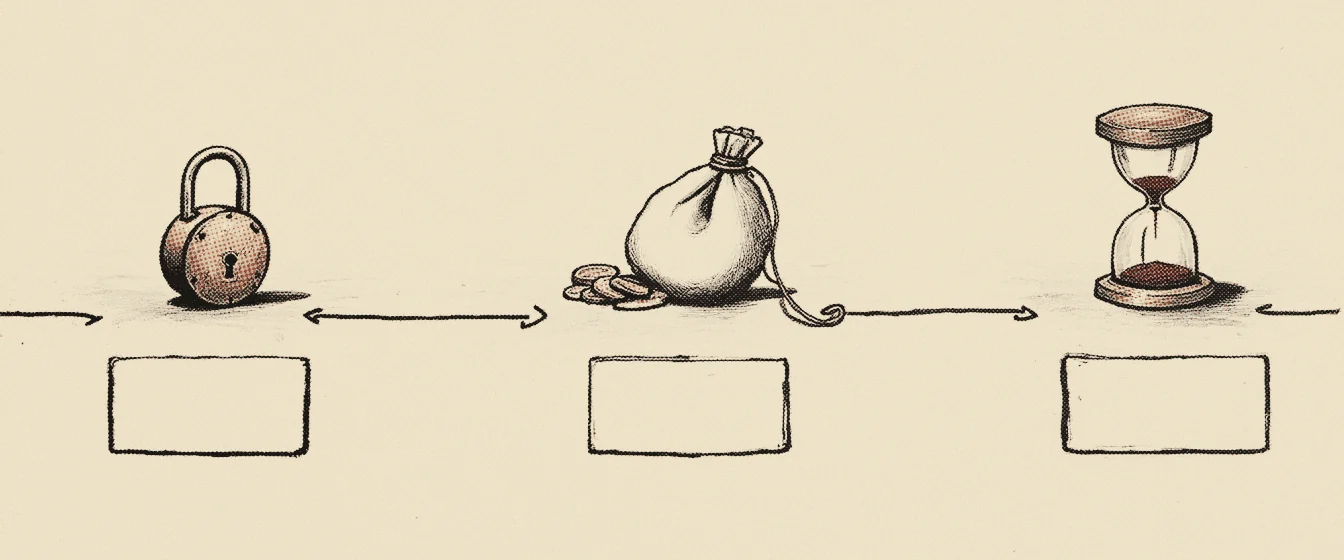 May not doUnpaid rentNo fast track
What a Landlord May Not Do, in One Section
Malaysia has no residential tenancy statute. What it has is a general civil code containing one sentence aimed squarely at this situation. Section 7(2) of the Specific Relief Act 1950 says that where property has been let under a tenancy, and the tenancy “is determined or has come to an end, but the occupier continues to remain in occupation”, then the person entitled to possession “shall not enforce his right to recover it against the occupier otherwise than by proceedings in the court”.
Read it slowly. It is not about whether the tenant is in the wrong — it assumes the tenancy has ended and the landlord is already entitled to possession, and removes self-help anyway. “Occupier” is defined broadly in subsection (3): “any person lawfully in occupation of the property or part thereof at the termination of the tenancy”, which reaches past the name on the agreement.
Section 8 is the same idea pointed the other way. Anyone “dispossessed without his consent of immovable property otherwise than in due course of law” may sue to recover possession “notwithstanding any other title that may be set up in the suit” — in that suit, who owns the place does not decide it. Section 8(4) then shuts the door behind the decision: “No appeal shall lie from any order or decree passed in any suit instituted under this section, nor shall any review of any such order or decree be allowed.”
⚠️ Editor’s Note: the Act publishes no list of forbidden acts — no clause names locks, water or furniture. What it gives is a test: was possession enforced other than by proceedings in the court, and was the occupier dispossessed otherwise than in due course of law. Whether a particular act crosses that line is a question of fact and law for a lawyer on your papers, not one an article can settle.
Unpaid Rent: Distress, and What It Cannot Touch
Arrears get their own statute. Under section 4 of the Distress Act 1951, “No landlord shall distrain for rent except in the manner provided by this Act.” Distress is a court bailiff seizing movable property at the premises and selling it to cover the rent — not something a landlord does, something a court orders.
The application is ex parte — the tenant is not heard first — by the landlord or an agent authorised in writing, to a Judge or Registrar. Section 5(1) sets the ceiling that catches people out: the warrant covers rent due “for a period not exceeding twelve completed months of the tenancy immediately preceding the date of the application”. Let the arrears run past that window and distress reaches the most recent 12 months, not the whole debt. Under the Rules of Court 2012 the application is by originating summons supported by an affidavit in Form 184, the agent’s written authority is Form 185, and the warrant is Form 186.
It can still be levied after the tenancy ends, but only on section 5(3) terms: the tenant must still be in occupation, or his goods must still be on the premises. Two more limits before anyone pins hopes on it. Section 3: the Act does not apply to rents due to the Government of Malaysia or of any State. Section 7: the court may require the applicant to pay into court, in cash, whatever sum it considers necessary to cover the bailiff’s fees and expenses — a real out-of-pocket cost no fee schedule can quote in advance.
Property the bailiff cannot seize
Section 8 lists what is off limits, and it is more than people expect:
- Things in actual use in a person’s hands at the time of the seizure.
- Tools and implements not in use, where there is other movable property on the premises sufficient to cover the amount and costs.
- The tenant’s necessary wearing apparel and necessary bedding for himself and his family.
- Goods held for the tenant’s trade — things in his possession to be carried, wrought, worked up or otherwise dealt with in the course of his ordinary trade or business.
- Goods belonging to guests at an inn, goods in the custody of the law, and Government, local authority and certain public property.
Once a seizure happens, section 9(1) starts a short clock. The bailiff makes an inventory and an approximate valuation, gives the tenant notice with both attached, and names a time and place of sale “not being less than six days from the date thereof” — unless the tenant pays within 5 days of that date, or obtains an order restraining the sale. The route to that order is section 16, and under Order 75 rule 5(1) the application must be made within 7 days of the seizure, supported by affidavit. Section 17 gives the Judge a wide menu: dismiss, discharge the warrant, release property on terms, try an issue and suspend execution meanwhile, or order a sale with the proceeds held in court.
If the sale goes ahead, section 19 fixes the order of payment: bailiff’s fees and expenses first, then the rent and costs due to the landlord, balance back to the tenant. Selling seized property outside the Act is an offence — section 24 puts it at a fine not exceeding RM500 or imprisonment not exceeding 3 months. Moving the furniture out to defeat a distress is anticipated too: section 21(1) lets a Judge authorise the bailiff, within 30 days of the removal, to follow the goods and seize them wherever found.
⚠️ Editor’s Note: distress recovers money, not the house, and whether it is worth doing depends on what is inside the unit and how much of it survives section 8 — a question for a lawyer before you pay anything into court, not after.

Getting the Property Back: There Is No Fast Track
There is a summary possession procedure. Order 89 of the Rules of Court 2012 lets a person claim possession by originating summons on affidavit evidence with no trial, and a final order can follow as little as 5 clear days after service. It is the fastest thing in the book, and it is not available here.
Rule 1 writes the exclusion into its opening sentence: the procedure applies where land is occupied solely by a person “(not being a tenant or tenants holding over after the termination of the tenancy) who entered into or remained in occupation without his licence or consent”. Squatters, yes. A former tenant who has not moved out, expressly no. That parenthesis explains why these cases take as long as they do.
So possession is claimed in an ordinary civil action. Section 70 of the Subordinate Courts Act 1948 gives the Sessions Court jurisdiction to hear a suit for the recovery of immovable property and to “issue order to the proper officer of the Court to put the plaintiff in possession of the property” — and section 70(2) lets the same suit carry a claim for rent or mesne profits, for damages from holding over or resisting re-entry, and for breach of covenant. One action, both problems. Section 93(1) applies sections 66 to 70 and 72 to 74 to the Magistrates’ Courts too.
Two limits sit on that. Section 70(4): the jurisdiction is not exercised where, in the Court’s opinion, “there is a bona fide question of title involved”. And the Distress Act has a narrow side door for the tenant who has vanished rather than dug in. Section 23 lets a Judge authorise the bailiff to enter and take possession, using force if necessary to get into a building — but only where all three conditions hold: the premises are let at a rack rent or a rent not less than three-fourths of annual value; rent has been in arrears for not less than 2 months of the tenancy; and the tenant has abandoned possession leaving no sufficient property to distrain against. Even then the bailiff affixes a notice and waits: if no interested person applies to a Judge within 10 days for a contrary order, the bailiff puts the landlord in possession and the tenancy is deemed determined. Still a court order — just a different one.
Which Court, and What the Filing Costs
The Office of the Chief Registrar publishes the money ladder, and lists “Dispute between Landlord and Tenant” among its examples of a civil claim:
| Court | What it hears |
|---|---|
| Small Claims Court | A claim by an individual of not more than RM5,000.00 |
| Magistrates’ Court | All civil claims up to RM100,000.00 |
| Sessions Court | All civil claims between RM100,001.00 and RM1,000,000.00 |
| High Court | All monetary claims, unlimited jurisdiction |
That ladder is the general rule, and the Act carves this topic out of it. Section 65(1)(a) gives a Sessions Court “unlimited jurisdiction to try all actions and suits of a civil nature in respect of motor vehicle accidents, landlord and tenant and distress”, while section 65(1)(b) caps other civil suits at RM1,000,000; section 72 adds that it may issue writs or warrants of distress for rent. The Magistrates’ Court limit for ordinary civil claims is RM100,000 under section 90, and a Second Class Magistrate is confined to a debt or liquidated demand not exceeding RM10,000 under section 92. Which court your case belongs in is a question about your case; the point here is that the carve-out exists.
The gazetted fees, and what they leave out
Appendix B2 of the Rules of Court 2012 sets subordinate court fees. It was replaced in full by P.U. (A) 67/2013 from 1 March 2013; the later amendments on record touch other items, not these:
| What you are filing | Order 93 claim | Magistrates’ Court | Sessions Court |
|---|---|---|---|
| Sealing a writ or originating summons to commence an action | RM20 | RM100 | RM200 |
| Sealing a writ of execution or distress | RM10 | RM40 | RM80 |
| Sealing the originating summons for leave to issue a writ of distress | — | RM100 | RM200 |
| Filing a notice of appeal | — | RM400 | |
Those are filing fees and nothing else — no solicitor, no service, no auction costs, and not the cash the court may require to be paid in for the bailiff under section 7 of the Distress Act. Anyone quoting a total for “evicting a tenant” is quoting something that is not in any gazette. And the recurring bills on the property carry on whether or not rent is coming in; those have their own escalation ladder in the assessment and quit rent guide.
The Deposit: The Small Claims Court, End to End
Now the other side of the table. With no Residential Tenancy Act in force, there is no single statutory deduction list and no statutory deadline for returning a deposit — what may be deducted starts with your tenancy agreement, which is why those clauses get their own treatment in the tenancy agreement guide. That does not mean a landlord’s deductions are unreviewable: general contract law and the evidence still decide a dispute. What the law supplies here is a cheap way to enforce the agreement.
The Judiciary describes the Small Claims Court as one that hears cases “between an individual plaintiff and a defendant whereby the amount claimed does not exceed RM5,000”, decided by a Magistrate under Order 93 of the Rules of Court 2012. Two eligibility points are easy to miss. Rule 1 defines a plaintiff as “an individual person who is not an agent or assignee of any debt of another person” — that restriction sits on the person bringing the claim, not on the person being sued, so a tenant who is an individual can still use this route against a landlord that is a company; what falls outside is a claim brought by a company, or one taken over from someone else. And rule 7 bars representation: “A party to any suit in this Court shall not be represented by a solicitor”, except where the defendant is required by law to be represented by an authorized person. Consult a lawyer, yes. Bring one to the hearing, no.
What it costs, form by form
| Document | Form | Fee |
|---|---|---|
| Writ (the claim itself) | 198 | RM20.00 |
| Statement of Defence / Counterclaim | 199 | RM8.00 |
| Defence to Counterclaim | 200 | RM8.00 |
| Judgment where the defendant filed no defence | 201 | RM40.00 |
| Judgment where the defendant is absent | 202 | RM40.00 |
| Judgment where the plaintiff is absent | 203 | RM40.00 |
| Judgment where the defendant admits the claim | 204 | RM40.00 |
| Application to set aside a judgment or order | 205 | RM20.00 |
| Consent judgment | 206 | RM40.00 |
| Judgment after hearing | 207 | RM40.00 |
| Notice to judgment debtor to show cause | 208 | RM20.00 |
Add RM8.00 for the affidavit of service once you have served the sealed writ yourself. One oddity at the counter: the instruction printed on Form 198 in the 2012 gazette says the fee is RM10, while Appendix B2 item 1(a) and the Judiciary’s current table both say RM20. Go with what the Registry charges on the day.
The sequence, and the two deadlines
- File Form 198 in four copies at the Subordinate Court Registry, signed or thumbprinted personally. The court gives you the hearing date. The Judiciary also runs an online pre-registration route, after which you take the reference slip to the counter to pay.
- Serve it yourself — personally, or by prepaid registered post to the defendant’s last known address — then file the affidavit of service.
- The defendant has 14 days from service to file Form 199. The Judiciary states plainly that failing to file within 14 days, or failing to attend the hearing, means “the judgment will be entered against you and the plaintiff will get a judgment sum as claimed”.
- The hearing. You prove your own claim with witnesses and documents; the Magistrate decides at the end. Costs are capped by rule 15 at RM100 to any one party, and costs for advocacy are not allowed at all.
- If nobody pays, rule 16 is the enforcement route: file a notice to show cause in Form 208, and after examining the judgment debtor the Court may order a writ of seizure and sale in Form 84, allow time or instalments, or order the judgment debtor to be committed to prison.
Two endings to plan around. A judgment given in someone’s absence can be set aside on an application in Form 205, but rule 10(2) requires it within 21 days of service of the judgment, or such further time as the Court allows. And the Judiciary is blunt about the main outcome: “The Magistrate’s judgement is final and neither party can appeal to a higher court.” The Courts of Judicature Act 1964 points the same way — section 28(1) of the 2006 reprint bars an appeal to the High Court where the amount in dispute is RM10,000 or less, except on a question of law. Treat the hearing as your one shot.
⚠️ Editor’s Note: bring the stamped agreement. Section 52(1) of the Stamp Act 1949 says an instrument chargeable with duty “shall not be admitted in evidence… unless such instrument is duly stamped” — but read proviso (a) too, which admits it “on payment of the duty and the penalty, if any, chargeable in respect thereof”. Unstamped is a problem with a price on it, not automatically the end of the claim — and that price is for the Collector, and if it comes to it, a lawyer.
The Clocks That Decide If You Still Have a Claim
Most of what goes wrong here is timing. Every deadline above, in one place, with the provision it comes from.
| Clock | Length | Where it comes from |
|---|---|---|
| Suing on a contract, including for a deposit | 6 years from when the cause of action accrued | Limitation Act 1953, s.6(1)(a) |
| Recovering rent arrears, by action or by distress | 6 years from when the arrears became due | Limitation Act 1953, s.20 |
| How far back a warrant of distress reaches | 12 completed months before the application | Distress Act 1951, s.5(1) |
| Rent unpaid before a notice to quit can expire on any day, not just the end of a tenancy period (periodic tenancy only, no contrary agreement) | 14 days after it became due | Distress Act 1951, s.25 |
| Tenant to pay after a distress seizure | 5 days from the notice | Distress Act 1951, s.9(1) |
| Earliest sale of seized goods | Not less than 6 days from the notice | Distress Act 1951, s.9(1) |
| Applying to discharge or suspend a distress | 7 days from the seizure | Rules of Court 2012, O. 75 r. 5(1) |
| Following goods removed to defeat a distress | 30 days from the removal | Distress Act 1951, s.21(1) |
| Deserted premises notice before possession passes | 10 days | Distress Act 1951, s.23 |
| Filing a small claims defence | 14 days from service | Rules of Court 2012, O. 93 r. 6(1) |
| Setting aside a small claims judgment | 21 days from service of the judgment | Rules of Court 2012, O. 93 r. 10(2) |
| Serving sealed court papers once filed | 6 months | Office of the Chief Registrar, civil procedures |
As for the question everyone asks — how long until I get the place back — nobody publishes it. The Judiciary’s Client’s Charter commits to disposing of cases “dalam jangka masa yang ditetapkan”, within the stipulated time, and attaches no figure. The only figures anywhere on the Judiciary’s own site are internal disposal targets set in a January 2018 address by the then Chief Justice: 6 to 9 months for civil cases in the Magistrates’ Court, 9 months in the Sessions Court and the High Court. A 2018 internal target for the courts — not a published service standard, and not a forecast for your case.
Sabah, Sarawak, and the Act That Is Not Here Yet
The backbone of this is national. The Specific Relief Act 1950 was extended to Malacca, Penang, Sabah and Sarawak on 1 July 1974 by Act A238; the Distress Act 1951 came into force in Sabah and Sarawak on 1 June 1981 under P.U. (B) 303/1981; and the Rules of Court 2012 govern civil procedure throughout. The small claims guidance quoted above is in fact published on the Judiciary’s own e-Kehakiman portal for Sabah and Sarawak.
The one difference stated in this article is the limitation clock. The Limitation Act 1953 says in section 1(2): “This Act shall apply to Peninsular Malaysia only.” So the six-year periods in the table above are Peninsular figures. Sabah and Sarawak each have their own limitation legislation, and rather than guess at an unverified number, check your own state’s law portal or ask a lawyer admitted there.
Where the Residential Tenancy Act actually stands
People have been hearing about a Residential Tenancy Act for years, so it is worth quoting the ministry rather than the rumour. KPKT’s strategic plan set out drafting steps — a Cabinet memorandum and submission of the draft Bill to the Attorney General’s Chambers, then tabling in Parliament and gazetting after passage. Then, on 10 August 2026, KPKT launched the National Housing Policy 2026–2035, and among the key reforms it introduces is “Menggubal Akta Sewaan Kediaman bagi mewujudkan pasaran sewaan yang lebih telus, selamat dan seimbang” — enacting a Residential Tenancy Act to create a more transparent, safe and balanced rental market.
Read that as what it is: as at September 2026 KPKT’s own current policy document still lists enactment as a reform to come, with no commencement date published. Until it commences, everything above is the law that applies. And because the two get confused: the tribunals KPKT runs are the Homebuyer Claims Tribunal and the Strata Management Tribunal, while the route the Judiciary publishes for a landlord-and-tenant dispute is the civil courts. What the Strata Management Tribunal handles, and what it costs, is covered in its own guide.
Walaoeh Verdict
Both sides end up in the same building, and the law is more prescriptive about the landlord’s conduct than the tenant’s. Section 7(2) takes self-help off the table before the argument about who is right even begins, Order 89 closes the only fast door, and the Sessions Court’s unlimited jurisdiction over landlord and tenant exists precisely because these cases were never meant to be settled at the door.
What that leaves is preparation. For a landlord: a stamped agreement, a clean rent ledger, and an early decision about whether the goal is money (distress, capped at 12 months of arrears, worth it only if something seizable survives section 8) or the property back (a civil suit, which can carry the arrears claim under section 70(2)). For a tenant: the deposit clause, photographs, and the knowledge that RM20 and a Form 198 buys a hearing the landlord cannot bring a lawyer to either. For both: the 6 year limitation clock is generous right up until it is not.
None of which decides your case. Tenancies differ, facts differ, and the same section can cut either way depending on the agreement. Before you file anything, or do anything at the property, take the papers to a lawyer.
Frequently Asked Questions (FAQ)
Can a landlord in Malaysia change the locks or cut the water if rent is unpaid?
The Specific Relief Act 1950 does not publish a list of prohibited acts, so the question has to be answered through the two sections that do exist. Section 7(2) says that once a tenancy has ended and the occupier remains, the person entitled to possession shall not enforce his right to recover it against the occupier otherwise than by proceedings in the court. Section 8(1) says a person dispossessed without his consent of immovable property otherwise than in due course of law may sue to recover possession, and section 8(4) allows no appeal from the order in such a suit. Whether a particular act amounts to enforcing possession outside the court, or to dispossessing the occupier otherwise than in due course of law, depends entirely on the facts — that is a question for a lawyer on your papers, and it is the reason the safe answer is to go to court rather than to the property.
How much does it cost to take a tenant to court in Malaysia?
Only the gazetted filing fees can be stated. Under Appendix B2 of the Rules of Court 2012, as substituted with effect from 1 March 2013, sealing a writ or originating summons to commence an action costs RM20 for an Order 93 small claim, RM100 in a Magistrates’ Court and RM200 in a Sessions Court. Sealing the originating summons for leave to issue a writ of distress is RM100 in a Magistrates’ Court and RM200 in a Sessions Court, and sealing the resulting writ of execution or distress is RM40 or RM80. A notice of appeal is RM400. None of that includes a solicitor, service, auction costs, or the cash the court may require to be paid in under section 7 of the Distress Act 1951 to cover the bailiff’s fees and expenses — so no total figure exists in any gazette.
How do I get my rental deposit back in Malaysia if the landlord refuses?
Where the amount does not exceed RM5,000 and the tenant is filing as an individual in person, the Judiciary’s small claims procedure under Order 93 of the Rules of Court 2012 applies — the individual-plaintiff rule falls on whoever brings the claim, not on the landlord being sued, so a company landlord as defendant does not put you outside this route. You file the claim in Form 198 in four copies at the Subordinate Court Registry for RM20.00, signed or thumbprinted personally, then serve it yourself personally or by prepaid registered post and file the affidavit of service for RM8.00. The defendant has 14 days to file Form 199; the Judiciary states that failing to do so, or failing to attend, means judgment is entered for the sum claimed. Neither side may be represented by a solicitor at the hearing, costs are capped at RM100, and the Judiciary states the Magistrate’s judgement is final. With no Residential Tenancy Act in force, there is no single statutory list of deposit deductions or return deadline — what may be deducted starts with your tenancy agreement, and whether your particular claim succeeds is for the Magistrate on the evidence and any other law that applies to your facts.
What is a warrant of distress, and how far back can it claim rent?
Distress is a court-ordered seizure of movable property at the premises, sold to cover unpaid rent. Section 4 of the Distress Act 1951 provides that no landlord shall distrain for rent except in the manner provided by this Act. The landlord, or an agent authorised in writing, applies ex parte to a Judge or Registrar — by originating summons supported by an affidavit in Form 184 under the Rules of Court 2012 — and section 5(1) limits the warrant to rent due for a period not exceeding twelve completed months of the tenancy immediately preceding the date of the application. Section 8 exempts a long list from seizure, including things in actual use at the time, the tenant’s necessary wearing apparel and bedding for himself and his family, and goods held for his ordinary trade. After seizure the tenant has 5 days to pay before a sale that cannot be earlier than 6 days from the notice, and 7 days under Order 75 rule 5(1) to apply to discharge or suspend the warrant.
Is there a fast eviction procedure for a tenant who will not move out?
Not for a tenant. Order 89 of the Rules of Court 2012 does provide a summary possession procedure by originating summons, with a final order possible as little as 5 clear days after service — but rule 1 applies it only where land is occupied by a person (not being a tenant or tenants holding over after the termination of the tenancy) who entered into or remained in occupation without his licence or consent. A former tenant still in occupation is expressly outside it. Possession is instead claimed in an ordinary civil action; section 70 of the Subordinate Courts Act 1948 gives the Sessions Court jurisdiction to order the proper officer to put the plaintiff in possession, and section 70(2) allows a claim for rent or mesne profits and damages for holding over to be added to the same suit. The Distress Act 1951 has a separate section 23 route where the tenant has abandoned the premises, rent has been in arrears for not less than 2 months, and nothing sufficient is left to distrain against — and that too is a court order, followed by a 10 day notice.
Sources
Every figure above comes from federal legislation, from gazetted subsidiary legislation, or from an official Malaysian government page, checked on 14 September 2026. No law firm article, property portal or news report was used anywhere.
- Specific Relief Act 1950 [Act 137] — the Laws of Malaysia reprint published by the Commissioner of Law Revision. Sections 7 and 8, and the commencement note extending the Act to Malacca, Penang, Sabah and Sarawak on 1 July 1974. Its cover states that it incorporates all amendments up to 1 January 2006; no later official consolidated text was located.
- Distress Act 1951 [Act 255] — sections 3, 4, 5, 7, 8, 9, 16, 17, 19, 21, 23, 24 and 25, and the commencement note for Sabah and Sarawak. Same reprint caveat: amendments up to 1 January 2006.
- Rules of Court 2012 [P.U. (A) 205/2012] — Order 75 (Distress Act proceedings), Order 89 (summary proceedings for possession of land), Order 93 (small claims procedure) and Appendix B2. Amended by P.U. (A) 67/2013, which substituted Appendix B1 and Appendix B2 in full from 1 March 2013 · P.U. (A) 126/2018, which set the notice of appeal fee · P.U. (A) 351/2020, which substituted Order 93 rule 1(2). Every amendment on the AGC list was downloaded and read, so the fee table above is the amended one.
- Subordinate Courts Act 1948 [Act 92] — sections 65, 70, 72, 90, 92 and 93. This one the AGC publishes as an updated online text as at 1 May 2013, which is why the money limits here are current · Courts of Judicature Act 1964 [Act 91], section 28(1), from the 2006 reprint.
- Limitation Act 1953 [Act 254] — section 1(2) on its application to Peninsular Malaysia only, section 6(1)(a) and section 20 · Stamp Act 1949 [Act 378], section 52 and its proviso.
- Office of the Chief Registrar, Federal Court of Malaysia — Procedures In Civil Cases, for the court ladder, the listing of landlord-and-tenant disputes as civil claims, and the service window · the Judiciary’s small claims guide, published on its e-Kehakiman Sabah and Sarawak portal, for the filing-fee table, the 14-day defence rule, the finality statement and the enforcement steps · the Client’s Charter, which publishes no case duration · a January 2018 address by the then Chief Justice, the only place on the Judiciary’s site where disposal timelines are stated.
- KPKT media release, National Housing Policy 2026–2035 (10 August 2026), the current official word on the Residential Tenancy Act · KPKT Strategic Plan 2021–2025 (2023 amendment), for the drafting steps · Housing and Strata Management Tribunal, for what those tribunals are.
About this guide. Written by an independent Malaysian and re-checked against official sources on a schedule. It is general information, not legal, tax, financial or medical advice — rules, fees and thresholds in Malaysia change, sometimes without notice. Where a decision affects your money or your rights, confirm with the official agency or a licensed professional before acting.